

Exploring the Meaning of the Kanas, Waleker, and the Crossing of Paths – Antajirasu
The Wayuu people, indigenous to the arid Guajira Peninsula straddling Colombia and Venezuela, have developed a vibrant and deeply symbolic tradition of weaving. This craft of weaving a Wayuu bag is not merely an artistic pursuit but serves as a living manifestation of their cultural narratives, social structures, and spiritual beliefs.
Women and the Art of Weaving:

From a young age, Wayuu girls learn the intricacies of creating kanas and handling the Waleker loom, often guided by the wisdom and patience of their elders. Weaving is not only a skill but also a rite of passage into adulthood, fostering a sense of identity, responsibility, and belonging within the community.
Through their artistry, Wayuu women become custodians of cultural knowledge, ensuring that the stories and symbolism embedded in each pattern are preserved and shared across generations. Their woven creations are symbolic of the importance of women in the matriarchal society of the Wayuu.
Weaving Technique:
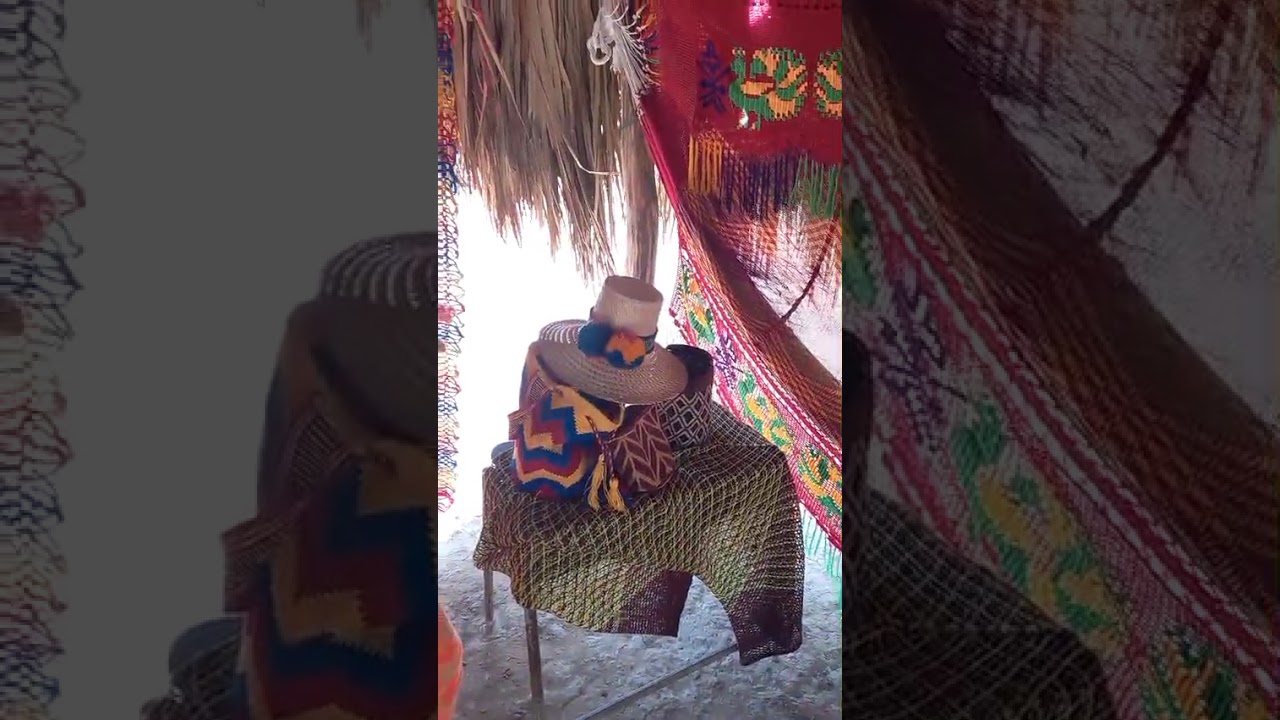
Click on image to see video of artisans weaving:
The crochet technique used by the Wayuu is primarily a specialised form of tapestry crochet. The most traditional and premium method is the single-thread technique, often worked only through the back loop to create a distinct ribbed texture and ensure vertical alignment of the patterns. It uses a single strand of yarn to create extremely tight, small, and detailed stitches. These bags take significantly longer to make—often 20 to 30 days—and result in a finer, more lightweight fabric. Wayuu bags are crocheted in a continuous spiral from the base upward, meaning there are no visible seams at the start or end of rows. The artisans maintain extremely tight and consistent tension, which is critical to the durability and clarity of the patterns. Unlike standard crochet where unused yarn is cut or left at the back, Wayuu artisans "stuff" the stitches by carrying all unused colours inside the working stitch. This makes the final product exceptionally sturdy and ensures the design is identical on both the inside and outside. Our selection of Wayuu bags are all made in this way
Kanas – Patterns as Storytellers:

Central to Wayuu weaving are kanaas, intricate geometric patterns painstakingly crafted into textiles such as hammocks, bags (known as mochilas), and belts. Each kanas tells a story, often reflecting the weaver’s clan, personal history, or elements of the natural world. These patterns are passed down through generations, and the act of weaving them is both a rite of passage and a means of preserving ancestral wisdom.
Waleker – The Loom and Its Spirit:

Waleker, the traditional loom, is considered far more than a tool; it embodies the spirit of weaving itself. According to Wayuu cosmology, Waleker was gifted to humanity by the spider deity, who taught the first Wayuu woman to weave. Each piece woven on Waleker is imbued with intention, respect, and the hope of continuity.
Antajirasu – The Crossing of Paths:
The concept of antajirasu, meaning the crossing of paths in Wayunaiki (the Wayuu’s language), is a philosophical cornerstone in Wayuu weaving. It symbolises both the literal intersection of threads and the metaphorical coming together of lives, destinies, and histories. When kanas are woven, their lines cross and intertwine, echoing how Wayuu communities interact and support one another. Antajirasu represents unity and the cyclical nature of existence, where every crossing in a pattern is a reminder of the interconnectedness of all things.
E’inaa and ‘Sho’ou’ - The Philosophical Importance of Weaving:
The other important concepts related to weaving and knitting are ‘e’inaa’ and ‘sho’ou’. On one level, in Wayunaiki they mean ‘to weave or to knit’ and ‘knot or the art of knotting’ respectively. On a deeper level, they are embedded in everything that the Wayuu do, including how they conceive and understand the world in their language Wayunaiki. Rafeal Segundo Mercado Epieyu et al (Epieyu 2021, p. 33), a Wayuu academic and educator, identifies the terms sho’oü [knots] and e’inaa [to knit] as central to the way in which the Wayuu interpret and narrate the world. He argues that the Wayuu practise a way of thinking and communicating in which the conceptual act of knitting and/or relating different ideas, words, objects, genres, traditions together is prevalent. Thus, according to this eminent Wayuu thinker, the Wayuu weave together ideas and objects to make and understand meaning.
Conclusion:
Through their weaving traditions, the Wayuu express resilience, creativity, and a profound respect for their cultural heritage. The threads of kanas, the guidance of Waleker, and the wisdom of antajirasu continue to shape the lives of the Wayuu, ensuring that their stories and values are carried forward with every textile created.
0 comments